
Call us now :08045804534
 Send Inquiry
 Send Inquiry
Wave Spring
MOQ : 1 Piece
Wave Spring Specification
- Capacity
- Heavy Duty
- Style
- Wave Spring
- Load Type
- Compression
- Material
- Stainless Steel
- Wire Diameter
- 0.8 mm
- Surface Finish
- Polished
- Fatigue Test
- Yes
- Thickness
- Customizable
- Packaging Type
- Box
- Standard
- IS, ASTM
- Color
- Silver
- Corrosion Resistance
- Yes
- Application
- Mechanical Seals, Valve Actuation
- Shape
- Round
- Diameter Range
- 10 mm to 300 mm
- Operating Temperature
- Up to 300C
Wave Spring Trade Information
- Minimum Order Quantity
- 1 Piece
- FOB Port
- yes
- Payment Terms
- Cash in Advance (CID), Cash Advance (CA)
- Sample Policy
- Free samples are available
- Main Export Market(s)
- Eastern Europe, Western Europe
- Main Domestic Market
- All India
About Wave Spring
Wave Spring is best for applications with short deflection and low to medium forces. The number of waves and material thickness can be changed to accommodate stronger forces. It is used for bearing pre-load. In addition to this, axial space can be reduced up to 50% and the load in an axial direction is transferable. As a result, the overall size of the assembly becomes smaller, reducing weight and production cost. For resourceful functioning, this Wave Spring is designed at our state-of-art processing unit by selecting excellent grade of basic components.
Features:
- Dimensional stability
- Sturdy design
- Simple to install
Engineered for Precision and Reliability
Designed for demanding industrial environments, our wave springs offer precision performance in mechanical seals and valve actuation systems. The heavy-duty build and fatigue-tested design make them a dependable choice for a wide range of engineering applications.
Customizable to Fit Your Specifications
Choose from a diameter range of 10 mm to 300 mm and request custom thickness to match your exact requirements. Our manufacturing capabilities ensure you receive wave springs that integrate seamlessly into your applications, delivering the performance you expect.
Resilient Against Corrosion and Heat
Crafted from premium-grade stainless steel with a polished finish, our wave springs are made to resist corrosion in harsh environments. Their excellent heat tolerance, up to 300C, ensures longevity and reliability even under high-temperature operating conditions.
FAQs of Wave Spring:
Q: How are wave springs used in mechanical seals and valve actuation systems?
A: Wave springs serve as reliable compression elements in mechanical seals and valve actuators by maintaining consistent force within confined spaces, enhancing operational efficiency and component longevity.Q: What benefits do stainless steel wave springs offer over conventional coil springs?
A: Stainless steel wave springs offer superior corrosion resistance, occupy less axial space, and maintain consistent load capacity. These attributes are especially valuable for heavy-duty applications and environments where durability is critical.Q: When should a customizable thickness or diameter be considered for wave springs?
A: Customizable thickness and diameter should be chosen when standard sizes do not meet the applications load or space limitations, enabling precise fit and optimal functionality within your assemblies.Q: Where can these wave springs be used apart from mechanical seals and valves?
A: Aside from seals and actuator systems, these wave springs are commonly utilized in clamps, couplings, and any setting where space-efficient compression and high resilience are required.Q: What is the typical process for manufacturing a heavy-duty wave spring?
A: The process typically involves precision forming stainless steel wire into a wave pattern, heat treatment for strength, polishing for surface finish, and comprehensive fatigue tests to ensure lasting durability.Q: How does corrosion resistance enhance the value of these wave springs?
A: Corrosion resistance extends the operational life of the wave springs in challenging environments, reducing maintenance needs and ensuring dependable performance over time.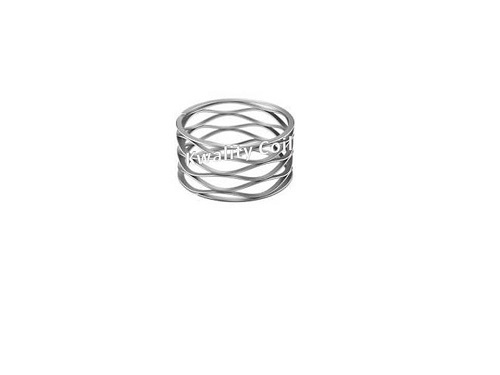
Tell us about your requirement

Price:
Quantity
Select Unit
- 50
- 100
- 200
- 250
- 500
- 1000+
Additional detail
Mobile number
Email

More Products in Industrial Springs Category
Garter Springs
Price 80 INR / Pack
Minimum Order Quantity : 100 Packs
Load Type : Other, Radial Compression & Extension
Wire Diameter : 0.25 mm to 1.5 mm Millimeter (mm)
Fatigue Test : Passed 1,000,000+ cycles
Style : Other, Helical, endless loop (garter type)
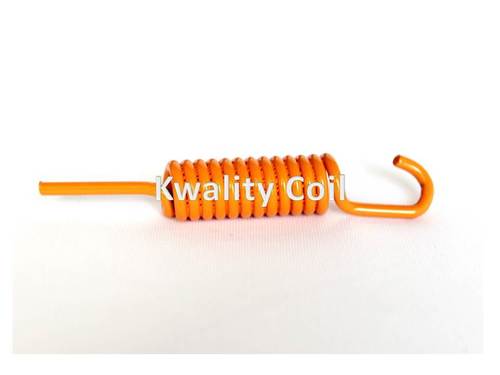
Extension Spring
Price 10 INR / Piece
Minimum Order Quantity : 1 Piece
Load Type : Other, Tensile
Wire Diameter : 2 mm
Fatigue Test : Performed
Style : Other, Hooked End

 Send Inquiry
Our Products


1/101, Spring Road, Surya Nagar, Alagarkoil Main Road, Madurai - 625014, Tamil Nadu, India

Mr Senthikumar Kumar V
(Managing Director)
Mobile :08045804534
 Send Inquiry
 Send SMS
Developed and Managed by Infocom Network Private Limited.
 English
 Spanish
 French
 German
 Italian
 Chinese (Simplified)
 Japanese
 Korean
 Arabic
 Portuguese